
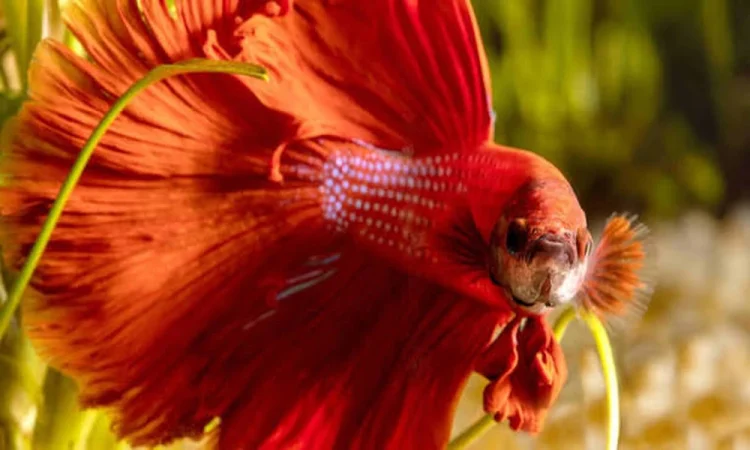
Often overlooked in favour of its more flamboyant counterpart, the female fighter fish offers comparable colour variety along with a temperament that opens up options males simply don’t allow, including small group housing.
Tank and Water Requirements
A minimum of 20 litres for a solo fish, or 60 litres or more for a group, along with gentle filtration and a stable heater between 24 and 27 degrees Celsius, form the essential setup.
Diet
A protein-rich diet built around quality pellet food, supplemented occasionally with live or frozen bloodworm or brine shrimp, supports healthy colour and condition.
Temperament and Compatibility
Less aggressive than males but still capable of establishing clear hierarchies, particularly in group settings. A single female is a straightforward choice, while a group requires more careful planning and space.
Health Watch-Outs
Fin rot, ich, and swim bladder issues from overfeeding are the most common problems, nearly all preventable with stable water quality and consistent maintenance.
Buying Tips
When browsing female fighter fish for sale, look for bright eyes, undamaged fins, and confident behaviour, and favour sellers who can advise on both solo and group housing options.
Quick Reference Summary
Tank size: 20 litres solo, 60 litres plus for groups. Temperature: 24-27°C. Diet: protein-rich pellets and occasional live or frozen food. Typical lifespan: two to three years.
Water Chemistry in Detail
Beyond the headline temperature range, pH and hardness matter more than many new keepers realise. A pH between 6.5 and 7.5 suits the vast majority of captive-bred stock, and a liquid test kit gives a far more reliable picture than paper strips, particularly for catching early ammonia or nitrite spikes before they affect a female fighter fish. Most UK tap water, once treated with a dechlorinator, sits comfortably within an acceptable range for this species without further adjustment.
Enrichment and Behaviour
These fish are more behaviourally engaged than many new keepers expect, often recognising their owner and responding to movement outside the tank. Occasional changes to décor, a new piece of driftwood, or supervised time exploring a shallow enrichment container can meaningfully increase activity levels in a fish that might otherwise settle into a fairly static routine near a favourite resting spot.
Breeding Considerations
Breeding is possible for keepers who want to go beyond basic care, though it requires a dedicated setup and close supervision. Males build bubble nests at the surface and can become aggressive toward females once spawning is complete, so a breeding attempt should never be undertaken in the main display tank without a clear plan for separating the pair afterwards.
Signs of a Well-Adjusted Fish
A settled, healthy female fighter fish typically shows steady appetite, active exploration of the tank, and a willingness to approach the glass when its keeper is nearby. These behavioural signs are just as useful an indicator of overall wellbeing as physical appearance, and a fish showing all of them is generally in good condition even if its colour hasn’t fully developed yet.
Seasonal Temperature Management
UK homes can experience noticeable temperature drops during colder months, particularly overnight, so it’s worth checking that a heater is appropriately sized for the tank volume rather than simply the smallest or cheapest option available. A thermometer placed away from the heater itself gives the most accurate read of the water the fish actually experiences.
Substrate and Tank Décor
Fine sand or smooth gravel is preferable to sharp-edged substrate, which can damage the delicate fins of a female fighter fish during normal exploration. Plenty of cover in the form of plants, driftwood, or smooth ornaments gives the fish somewhere to retreat and reduces overall stress, particularly in a tank positioned somewhere with regular foot traffic nearby.
Lighting and Daily Routine
A consistent light cycle of eight to ten hours daily, ideally on a timer, helps establish a predictable routine and supports any live plants without encouraging excessive algae growth. Fish kept on an irregular or overly long light cycle can show subtly increased stress over time compared to those on a consistent schedule.
Handling and Acclimatisation
Time spent in transport should be kept as short as possible for a female fighter fish, since small volumes of water change temperature and oxygen levels quickly. Float the sealed bag in the destination tank for around fifteen minutes, then gradually mix in tank water over a further period before release, rather than transferring the fish immediately into unfamiliar conditions.
Individual Temperament
Personality varies noticeably between individuals, even within the same colour variety, and this is worth bearing in mind when assessing whether a fish is settling in normally. Bold, inquisitive behaviour from day one is a good sign but not the only good sign; a more cautious fish that gradually becomes more confident over the first couple of weeks is equally normal.
Cost Over the Full Lifespan
Ongoing costs are modest across a typical two to three year lifespan once the initial equipment is purchased, which makes investing properly in a suitably sized tank and reliable heater a sensible use of the overall budget rather than an unnecessary expense.
Putting It All Together
None of the individual requirements for keeping a female fighter fish are particularly demanding, but consistency across all of them, from water changes to feeding to temperature stability, is what separates a fish that thrives for its full lifespan from one that merely survives. Building a simple, repeatable routine early on removes most of the guesswork from long-term care.
Sourcing Live Plants Safely
Live plants offer real benefits for a female fighter fish, including natural cover and subtle water quality improvements, but they should be quarantined or at least rinsed thoroughly before introduction, since plants from mixed retail displays can occasionally carry pest snails or residues from pesticide treatment. A short quarantine period in a separate container reduces this risk considerably without adding much complexity to the overall setup process.
Recognising a Well-Cycled Tank
A properly cycled tank will show consistently low or zero ammonia and nitrite readings alongside a measurable, gradually rising nitrate level, which indicates the beneficial bacteria colony is established and functioning correctly. Testing at this stage, before introducing a fish, gives far more useful information than testing reactively after a problem has already appeared.
A final practical note: keep spare filter media and a backup thermometer on hand where possible, since replacing a failed component quickly matters more for a female fighter fish than for hardier species less sensitive to sudden changes in water quality or temperature. A small spares kit costs very little relative to the setup as a whole and removes one more source of potential stress for the fish.
Whether kept solo or as part of a carefully managed group, this fish rewards attentive keepers with genuine colour and personality alongside relatively modest ongoing care.