
You might be feeling that shift from a routine vet visit to something far more serious, where a limp will not resolve, lab work raises new questions, or your pet’s breathing, appetite, or behavior changes in ways that are hard to explain. In that moment, it is normal to feel pulled in two directions at once. You want answers quickly, and you also want to be sure no step is missed. That is often where specialist support comes in, especially when working with a veterinarian in Pembroke Pines, FL. When animal hospitals partner with specialists for complex cases, the goal is simple. Your pet gets a wider circle of medical insight, more advanced tools when needed, and a care plan that does not rest on one opinion alone.
For many families, the hardest part is not just the diagnosis. It is the uncertainty between appointments, the cost questions, and the fear of making the wrong call. Because of that tension, it helps to know how these partnerships usually work. Your primary veterinarian often remains the central guide, while specialists such as surgeons, internists, neurologists, cardiologists, or oncologists step in for deeper evaluation and treatment planning. That shared approach can make a hard situation feel more manageable.
Why would an animal hospital involve a specialist in a difficult pet case?
Sometimes a case is complex because the symptoms do not point to one clear problem. Other times, the diagnosis is known, but treatment requires equipment, training, or procedures that go beyond general practice. A dog with seizures may need a neurologist. A cat with a heart murmur before surgery may need a cardiology workup. A pet with a mass may need advanced imaging, biopsy review, and surgical planning from more than one doctor.
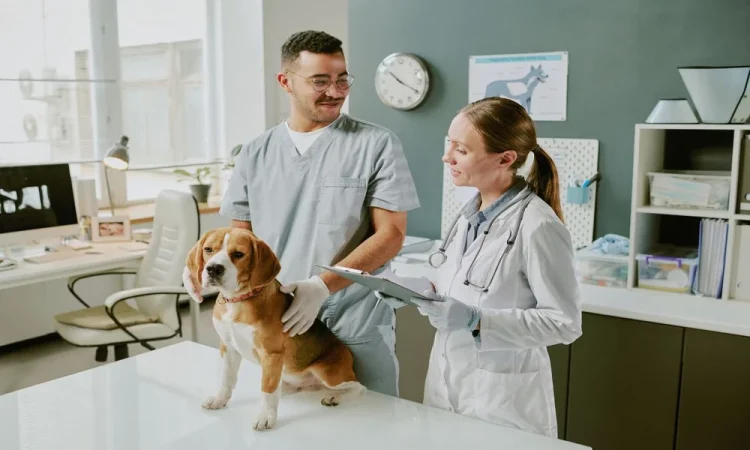
This does not mean your regular veterinarian has reached a dead end. In many cases, it means they are doing exactly what you would hope. They are widening the lens. A strong veterinary referral partnership allows a general practice team to gather specialist input while still staying involved in your pet’s overall care. That can reduce delays, prevent repeated testing, and help each doctor focus on what they do best.
So, where does that leave you as the pet owner? Usually in a better position than you may realize. A referral can open access to advanced services like CT scans, MRI, endoscopy, specialty surgery, cancer treatment, or internal medicine consults. Schools and teaching hospitals often make this process clear through dedicated referral systems, such as Virginia Tech’s referrals and consultations, Tufts’ veterinarian referral program, and the University of Illinois consultation and referral forms.
What makes specialist collaboration so helpful when a pet’s condition is unclear?
The biggest benefit is often clarity. Complex cases can become expensive and stressful when care moves in circles. One test leads to another, symptoms change, and each day without a plan feels heavy. When a general animal hospital and a specialist communicate well, they can sort through the case in a more focused way. They review records, compare findings, and decide which next step is most likely to help.
There is also a practical side. If your pet needs anesthesia, surgery, or long-term treatment, coordinated care lowers the chance that details get lost. Medication lists, previous imaging, bloodwork trends, and response to past treatment all matter. In a strong specialist care for pets model, those details move with your pet instead of starting from zero at each appointment.
What if the case is urgent? In emergency settings, partnership matters even more. A local animal hospital may stabilize your pet, then connect with a specialty center for overnight monitoring, transfusion support, or emergency surgery. That handoff can save time when time matters most.
How do costs, timing, and communication compare in shared veterinary care?
Referral care can feel intimidating because people often assume it always means higher costs and more confusion. Sometimes costs do rise, especially when advanced diagnostics are involved, but collaboration can also prevent wasted time and repeated procedures. The real question is not only what referral care costs, but what it helps avoid.
| Situation | General Animal Hospital Only | Animal Hospital With Specialist Support |
|---|---|---|
| Unclear diagnosis | May require trial and error over multiple visits | Often moves faster toward targeted testing and answers |
| Advanced imaging or surgery | May require outside scheduling later in the process | Access can be arranged earlier with case review in place |
| Medication management | Good for routine conditions | Helpful when disease is rare, severe, or not responding |
| Communication | One main doctor, which feels simple | Best results when records and updates are shared clearly |
| Overall cost path | Lower at first, but may increase with delays or repeat tests | Higher upfront in some cases, but can reduce detours |
For example, if a dog has chronic vomiting, months of diet changes and medication trials may still leave you without an answer. A referral to internal medicine for ultrasound or endoscopy may cost more at the start, but it can also uncover the real problem sooner. The same is true for orthopedic injuries, heart disease, and cancers that need staging before treatment decisions are made.
What can you do right now if your pet may need referral care?
1. Ask what problem the referral is meant to solve.
A referral should have a purpose. Ask whether the specialist is being consulted for diagnosis, a procedure, treatment planning, or a second opinion. That one question can help you understand the value of the visit and what outcome to expect.
2. Request a full copy of records before the appointment.
Get lab results, imaging reports, medication history, and visit notes. This saves time and helps the specialist see the full picture. It also helps you feel less lost, because you are not depending on memory when emotions are high.
3. Clarify who will manage follow-up care.
Some treatments happen at the specialty hospital, while routine rechecks and long-term monitoring may return to your regular veterinarian. Ask who to call for side effects, refill questions, or after-hours concerns. Clear roles make shared care much smoother.
When your pet needs more than one expert, what should you remember?
If your pet’s case has become more complicated than you expected, you are not overreacting by asking questions or seeking another layer of care. That is often the right move. A well-run partnership between a general animal hospital and a specialist can bring sharper answers, safer treatment choices, and a plan that feels steadier when everything else does not.
You do not have to figure it all out in one sitting. Start with the next conversation, ask what kind of specialist support is being considered, and make sure the plan is clear. When doctors work together well, your pet benefits, and you get something you need too, which is a little more confidence in the road ahead.