
You might be reading this after a long night of worry. Maybe your dog suddenly started vomiting and you rushed to the animal hospital, or your cat has been losing weight and hiding, and you cannot shake the feeling that something is very wrong. You sit in the exam room with experienced Toronto veterinarians, hearing words like “bloodwork,” “imaging,” and “waiting for results,” and your mind goes straight to the worst possibilities.end
In those moments, time feels heavy. Every hour you wait for answers feels like a day. You are not just waiting for a test result. You are waiting to know what comes next for an animal you love like family.
That is where the value of on site diagnostic labs in animal hospitals really shows. When a clinic can run many tests right there, instead of sending them away, you often get faster answers, more focused treatment, and in many emergencies, a better chance for a good outcome. You also get something just as important. Less uncertainty and less helpless waiting.
So, where does that leave you as a pet owner trying to make smart choices about care, costs, and trust in your veterinary team?
Why waiting for answers about your pet feels so hard
Think about a common situation. Your dog comes in with sudden weakness and pale gums. The veterinarian is worried about internal bleeding. They recommend blood tests and imaging right away. If those tests have to be sent to an outside lab, you might be told that results will come back tomorrow, or even later.
During that time, your dog may be getting “supportive care,” yet the team is still guessing which problem they are treating. Is it a clotting disorder, a ruptured tumor, a severe infection, or something else entirely. You might approve expensive treatments without knowing exactly why they are needed. The emotional and financial pressure can be intense.
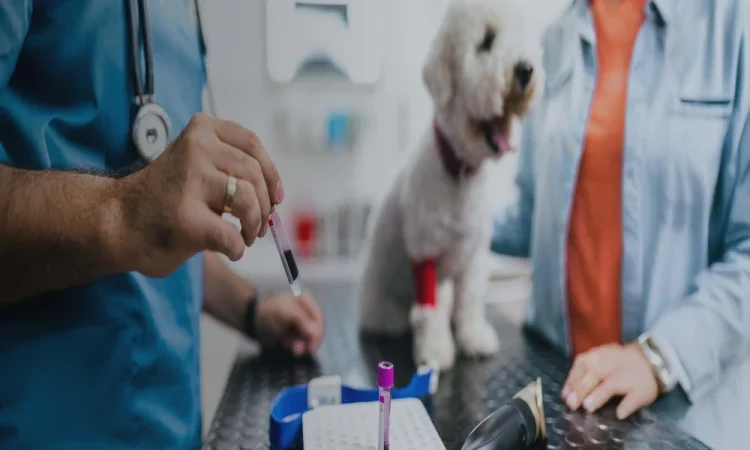
Now picture the same visit at an animal hospital with in house veterinary diagnostics. Bloodwork, clotting tests, and basic imaging are done within the hour. The veterinarian walks back in with clear data and can say, “Here is what we found. Here are your options.” The situation may still be serious, but you are no longer in the dark.
Because of this contrast, you might wonder. Are on site labs just a nice extra, or do they truly change outcomes for animals and their owners.
What makes on site labs so valuable for pets and their owners
There are a few key reasons why an animal hospital with its own lab can often serve you and your pet differently.
First, there is speed. Many routine tests, such as complete blood counts, basic chemistries, and urinalysis, can be done within the same visit. In urgent cases, this can direct treatment within minutes instead of days. Research in veterinary diagnostics continues to show how early detection and monitoring improve management of diseases like kidney failure, diabetes, and infectious conditions. Central reference facilities, such as the National Veterinary Services Laboratories, highlight how fast and accurate testing is the backbone of disease control. The same principle applies on a smaller scale in your local clinic.
Second, there is clarity. When veterinarians can repeat or adjust tests quickly, they are less likely to treat blindly. For example, a cat in kidney crisis might need bloodwork several times over a few days to fine tune fluids and medications. An on site lab allows the team to adjust the plan in real time. That can reduce complications and sometimes shorten hospital stays.
Third, there is continuity. The team that knows your pet can see samples, look at trends, and interpret changes in the context of your pet’s history. They are not just reading numbers on a page. They are connecting those numbers with the animal in front of them. A recent review of infectious disease diagnostics in animals, such as the one discussed in this open access veterinary study, reinforces how important thoughtful interpretation is, not just the test itself.
Of course, that does not mean every test should or can be done in house. Advanced tests for rare infections, specialized cancer markers, or complex genetic panels often still go to outside reference labs. Those laboratories are built for high volume, special equipment, and strict quality control.
So the real value is not “on site versus outside” as an all or nothing choice. It is having an animal hospital that knows when fast in house answers are best, and when to send something out for deeper analysis.
How do in house labs compare with outside labs in real life decisions
When you are sitting in an exam room, you are not thinking about lab architecture or testing platforms. You are thinking about, “Is my pet getting what they need” and “Can I afford this.” A simple comparison can help you see where on site labs fit into those questions.
| Aspect | On Site Diagnostic Lab | Outside Reference Lab |
|---|---|---|
| Result timing | Minutes to a few hours for many tests. Same visit answers possible. | Several hours to a few days, depending on shipping and lab schedule. |
| Use in emergencies | Very helpful for triage, surgery decisions, and critical care monitoring. | Limited for immediate decisions. Better for follow up or complex workups. |
| Cost to owner | Often similar or slightly higher per test, but can reduce extra visits and delays. | Sometimes lower per test, yet may involve repeat visits and added exam fees. |
| Type of testing | Routine bloodwork, basic chemistries, urinalysis, some hormone and infection tests. | Advanced panels, rare infectious diseases, pathology, and genetic testing. |
| Impact on treatment plan | Allows real time adjustments, quicker diagnosis, and earlier targeted therapy. | Refines or confirms diagnoses, supports long term management, and complex cases. |
Looking at this, you can start to see that the real question is not “Which is better overall” but “Which is better for my pet’s situation today.”
What should you do when choosing an animal hospital
Choosing where to take your pet is personal. It involves trust, communication, and often your budget. Here are three steps you can take to use the value of an animal hospital diagnostic service to your advantage.
1. Ask directly about on site testing and when it is used
You are allowed to ask, “What tests can you run here today, and which would you send out.” A thoughtful hospital will explain their setup. They might say they can run routine bloodwork on site, but send advanced hormone tests to an outside lab. They should also be willing to explain how that affects timing, cost, and decision making for your pet.
When you hear a plan, listen for clarity. For example, “We will do in house bloodwork now to see if your dog is stable for anesthesia. Then, if we find anything unusual, we may send an additional panel to an outside lab.” Clear steps like this show that the team is using both resources wisely.
2. Talk openly about urgency, budget, and what you value most
Some situations are true emergencies. In those moments, rapid in house testing may be the difference between acting in time and missing a narrow window. In other situations, such as long term skin problems or mild stomach issues, sending tests to a reference lab might be enough and can sometimes save money.
Tell your veterinarian what matters most to you today. You might say, “I am really worried about missing something serious, so I want the fastest answers we can reasonably get,” or, “My budget is tight. Can we prioritize the tests that will change the treatment plan right now.” A good team will help you balance cost with the benefits of fast information from in clinic lab testing.
3. Ask how lab results will be used to guide the next steps
Test results by themselves are just numbers. What matters is how they shape the plan for your pet. Before you agree to testing, ask, “If this test is normal, what will we do. If it is abnormal, what changes.” This helps you see whether a test is truly necessary, and whether doing it on site could speed up the decisions that follow.
If the hospital has on site testing, they should be able to tell you how quickly they can repeat certain tests, how they monitor trends, and how that ongoing information helps adjust treatment. This can give you more confidence that your money and your time are being used wisely.
Moving forward with more confidence and less fear
Caring for a sick or injured animal is never easy. There is fear, there are financial worries, and there is the heavy feeling of being responsible for a life that cannot speak for itself. You deserve a team that sees that weight and works with you, not around you.
When you understand the value of on site diagnostic labs in animal hospitals, you are better prepared to ask the right questions, understand your options, and choose care that matches both your pet’s medical needs and your own limits. Quick access to answers does not remove every hard decision, yet it can replace a long stretch of fear and guessing with a clearer path forward.
As you choose or re evaluate your veterinary care, look for an animal hospital that explains its diagnostic options plainly, uses in house and outside labs thoughtfully, and invites you into the conversation. You and your pet deserve that level of attention, and it is entirely reasonable to expect it.